
The WNBA has spent three weeks treating its most valuable asset like an inconvenience. Three separate incidents. Three different departments. One consistent message.
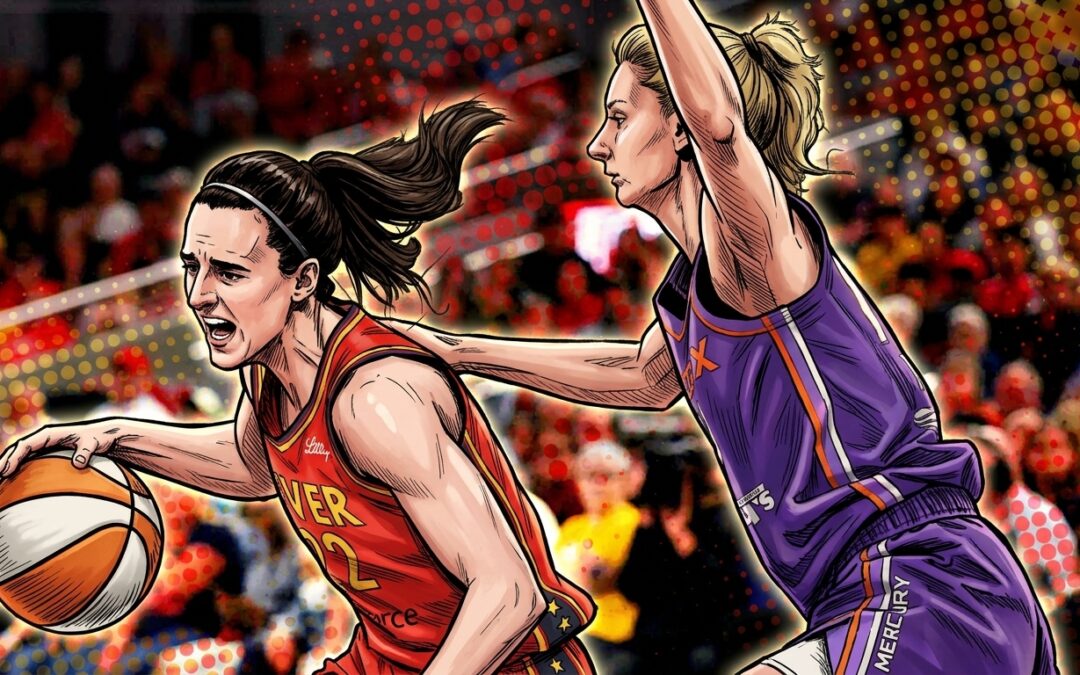
Start with the technical foul. On June 22, Clark picked up her fifth technical of the season against the Phoenix Mercury — assessed for clapping after a scuffle with DeWanna Bonner, with referee Gerda Gatling confirming that clapping was the reason. The Indiana Fever appealed. As of June 25, it’s still pending. Compare that to May 22, when Paige Bueckers got a technical for clapping against Atlanta. The WNBA rescinded it within 48 hours. Same act. Different player. Different outcome. The league has not offered any explanation for why these two situations were handled differently.
Then there’s the anniversary poster. The WNBA released a 30-player graphic to celebrate its 30th season. Clark was left off. So were Sue Bird, Diana Taurasi, Tamika Catchings, and Candace Parker — a collection of the greatest players in league history. Clark’s teammate Sophie Cunningham made the cut. The league offered no public explanation for the selections. This isn’t about Cunningham — she’s a solid player and a Fever contributor. But consider who was left out: the woman whose June appearance on CBS drew 2.557 million viewers for a regular season game, the most-watched WNBA regular season game since 2000. That number alone demands an explanation. The league hasn’t given one.
The All-Star vote is the least damning of the three, but it’s worth a closer look. As of June 24, Clark trails teammate Aliyah Boston 683,996 to 670,510 in the second fan vote return. That gap actually tells you something: Clark has elevated the entire Fever brand to the point where her own teammate is pulling nearly 700,000 votes. That part isn’t a snub. That part is the league’s investment paying off exactly as intended.
The tech foul and the poster are different. Those are institutional decisions, made by the league office, with no accountability attached. Clark is averaging 21.3 points, 8.2 assists, and 4.3 rebounds per game. She holds the WNBA record for career 20-point/10-assist games. The product is better because she’s in it. The league knows this. The ratings prove it.
The problem isn’t malice. It’s something more frustrating than malice — it’s an organization that keeps fumbling the easiest layups in sports marketing, then going quiet when asked why. Fans have noticed. A pattern of small, avoidable decisions that add up to the same conclusion every time: the WNBA still hasn’t figured out how to get out of its own way.
Clark said it herself after the Mercury game: “I got a technical for clapping.” She wasn’t wrong. The league just hasn’t gotten around to caring.
#Fever star Caitlin Clark called her fifth tech of the season “ridiculous.” 8 techs = one-game suspension.
“We should all just go on the calendar now and pick a game that I’m gonna be suspended for if I’m gonna get technicals for clapping.”
CC called out official Gerda Gatling. pic.twitter.com/n8pMon1qqP
— James Boyd (@RomeovilleKid) June 23, 2026