
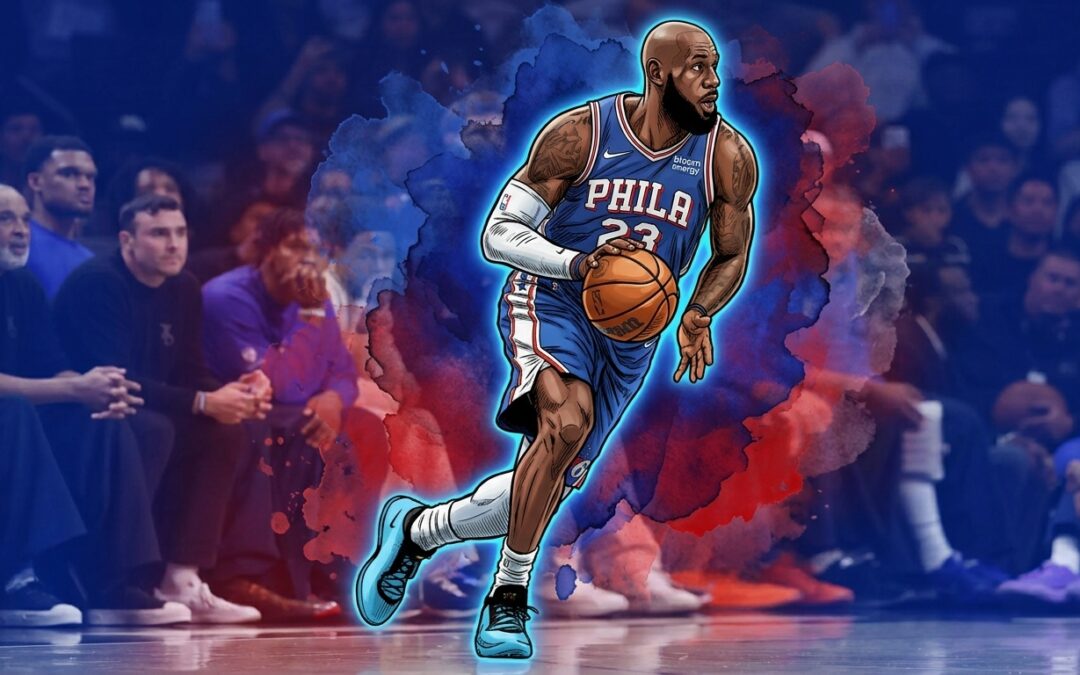
LeBron James signed with the Philadelphia 76ers this summer for $3,876,529 this season. Call it the veteran minimum: a 95 percent cut from the two-year, $104 million deal he just walked away from in Los Angeles. On paper, the Sixers got the most accomplished player of his generation for the price of a rotation big man. In practice, a bunch of rival owners think the Fanatics helicopter that comes with the deal is worth a lot more than that, and they’re annoyed enough about it to start dialing up a reporter.
That reporter is Pablo Torre, and he didn’t go looking for this one.
Pablo Torre says NBA owners have contacted him about LeBron James flying in a Fanatics helicopter and he is "looking into" it. pic.twitter.com/8hdtkvFtzZ
— Front Office Sports (@FOS) October 13, 2026
Owners picking up the phone to tip off a journalist isn’t a quirky footnote. It’s the headline.
Teams don’t call reporters about perks they find charming. They call when they think someone found a crack in the system and is using it. This is a specific kind of crack: a 41-year-old on a minimum contract getting flown around on someone else’s dime.
The real value of LeBron’s deal is in the Fanatics helicopter access, not the salary on the cap sheet. As part of his long-term partnership with the company, LeBron can hop on a Fanatics-branded chopper any time he wants to get between Philadelphia and his home in New York, a roughly 45-minute flight that similar commercial charters run for $6,000 to $9,000 each way, per TMZ’s original report. It’s a signing bonus with better PR, uncapped, untaxed, and invisible to anything the league actually tracks.
Fanatics CEO Michael Rubin used to own a piece of the Sixers. Selling that stake didn’t end the relationship — he’s still Josh Harris’s guy, the one who throws the parties and gets quoted defending the organization. A room full of people has already heard exactly how he operated when he had a seat at the table: saying so himself at the MIT Sloan Conference, he copped to “violating every rule the NBA had” during his time with the team, on a stage, with a microphone in front of him.
LeBron isn’t the villain in any of this — he didn’t write the rules, and taking a helicopter ride a company offered him isn’t a crime against competitive balance. One level up is where the real problem sits: a company run by a man tied to the team that’s paying LeBron almost nothing.
Competitive integrity doesn’t stand a chance against billionaires running side companies, because the arrangement is built to be deniable: nobody signs a side contract, nobody has to. No signature required — the helicopter just happens to exist, just happens to be free, and just happens to connect Philadelphia to the exact apartment LeBron lives in.
Torre investigated Kawhi Leonard’s Aspiration endorsement deal a few years back and the Clippers lost five first-round picks over it. The league has already shown it will act on exactly this kind of arrangement when it’s convinced the paper trail is real. Whether this one gets anywhere near that is still Torre’s job to find out, not something to predict from a blog.
But the owners didn’t call him because they were curious. They called him because they’re scared somebody’s getting away with something, and they want it to stop before it becomes the new market rate for “veteran minimum.”