
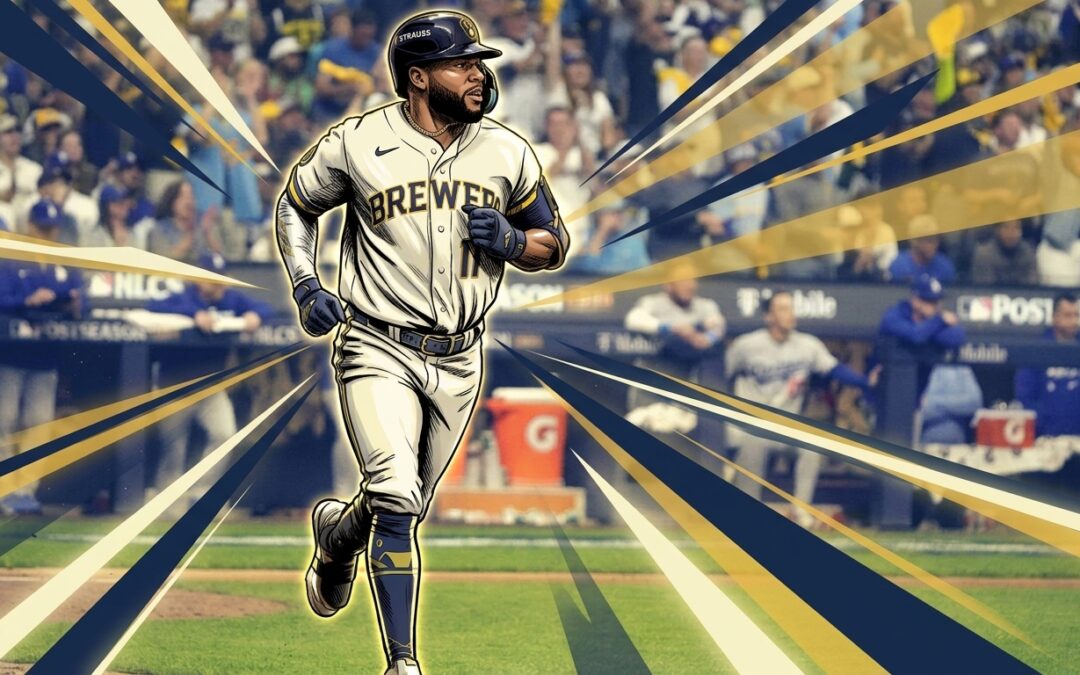
Milwaukee didn’t back into this. The Brewers swept the two-time defending champion Dodgers out of the NLCS, finished the job with a four-run comeback in the clincher, and still have to sit through a stretch of Dodgers fans online insisting the whole thing doesn’t count.
Here’s what actually happened. Milwaukee fell behind 4-0 in Game 4, clawed all the way back, and won it 6-4 to complete a four-game sweep of Los Angeles. That comeback tied the largest in MLB history to clinch a League Championship Series. It capped a series the Brewers controlled from start to finish, not the two-time champs. Milwaukee hasn’t been to a World Series since 1982, back when it was still an American League club, and this is the franchise’s first National League pennant, ever. Forty-four years is a long time to wait, and it ended on a comeback instead of a coronation.
Was the Sweep Actually a Fluke?
Milwaukee won four straight against a team carrying a $339 million payroll — every single game, no slip-ups to hide behind. Even Skip Bayless, who built a career on picking fights with conventional wisdom, called the Dodgers the heavily favored team going in:
CONGRATULATIONS TO THE MILWAUKEE BREWERS FOR FLIPPING THE SWEEP SCRIPT ON THE HEAVILY FAVORED LOS ANGELES DODGERS.
— Skip Bayless (@RealSkipBayless) October 16, 2026
Beating the favorite four straight is the definition of an upset. Somewhere in Los Angeles right now, someone is drafting a strongly worded post asking the league to run the series again. Rob Manfred’s office does not do mulligans.
Brewers manager Pat Murphy had the line of the postseason on his way out of the clubhouse:
Pat Murphy following Brewers sweep of Dodgers in NLCS:
"They may have a bunch of Hall of Famers, but we have a bunch of gamers. And the gamers won this week." pic.twitter.com/4HHVJd9cA1
— Underdog MLB (@UnderdogMLB) October 16, 2026
Murphy’s line proves the series came down to preparation and execution. The Dodgers had the names; Milwaukee had the record, the execution, and now the pennant.
Real Baseball Beat the Super Team
A 103-win season, the best record in the sport, and Milwaukee still didn’t get there by hitting the ball over the fence. Milwaukee finished 28th in the league in home runs, first in on-base percentage, first in batting average, and fifth in stolen bases. Chris Broussard broke down exactly those numbers on First Things First:
“They are a testament to real baseball. They were 28th in the league in home runs. But they were 1st in on-base percentage, 1st in team batting average, 5th in stolen bases. They played baseball.”@Chris_Broussard breaks down what the Brewers proved in sweep of Dodgers: pic.twitter.com/aZVeyx4eDK
— First Things First (@FTFonFS1) October 16, 2026
Milwaukee built something sturdier than a lineup of sluggers waiting for one swing to bail them out.
Jackson Chourio gets a lot of the attention, and he earned some of it. He opened NLCS Game 3 with a leadoff home run on the first pitch — a near-exact rerun of what he did in Game 2 of last year’s series against this same opponent. But crediting one guy undersells how this team wins. Milwaukee’s pitching staff held a $339 million roster to four losses in four tries; its lineup worked counts and ran bases while the Dodgers waited on power that never showed up consistently enough.
Milwaukee’s Window Is Open. The Dodgers’ Just Got Smaller.
This gap isn’t close. In 2026, the Dodgers carried a $339 million payroll. Milwaukee carried $146 million, nearly $200 million less, and still won more games in the regular season before beating Los Angeles four straight times when it mattered most. Jeff Passan has been making this point for weeks:
Major League Baseball wants a salary cap and says it's to ensure smaller-market, lower-payroll teams can win in the postseason.
Milwaukee, Cleveland and Tampa Bay are winning without one.
Free at ESPN, how to reconcile the 2026 postseason and cap talk: https://t.co/jnBj68nNYr
— Jeff Passan (@JeffPassan) October 14, 2026
MLB wants a salary cap under the premise that low-payroll teams can’t compete in October. Milwaukee, Tampa Bay, and Cleveland just spent this postseason arguing otherwise in real time.
This doesn’t mean the Dodgers’ era is over. A two-time champion doesn’t lose its core after one bad series, and the front office that built this roster isn’t going to stop building it. But a three-peat bid died in four games against a team with less than half the payroll. With the three-peat gone, real questions remain for the front office. Roster construction, and whether star power alone travels through a short series — none of that disappears just because the Dodgers would rather talk about next year.
Milwaukee doesn’t have that problem. The Brewers are headed to American Family Field for Game 1 on Oct. 23, waiting on whoever survives the Rays-Guardians ALCS, with the look of a team that has already done the hard part. Keep up with the matchup and everything else in our MLB coverage as it gets settled. A 44-year drought ended because this team played actual baseball. Call it whatever you want. It happened four times in a row.